
News
JUC Students Explore the Benjamin Plateau, Gezer, and Jericho
JUC students explore Gezer, the Benjamin plateau, and Jericho, connecting biblical narratives with archaeology and geography.
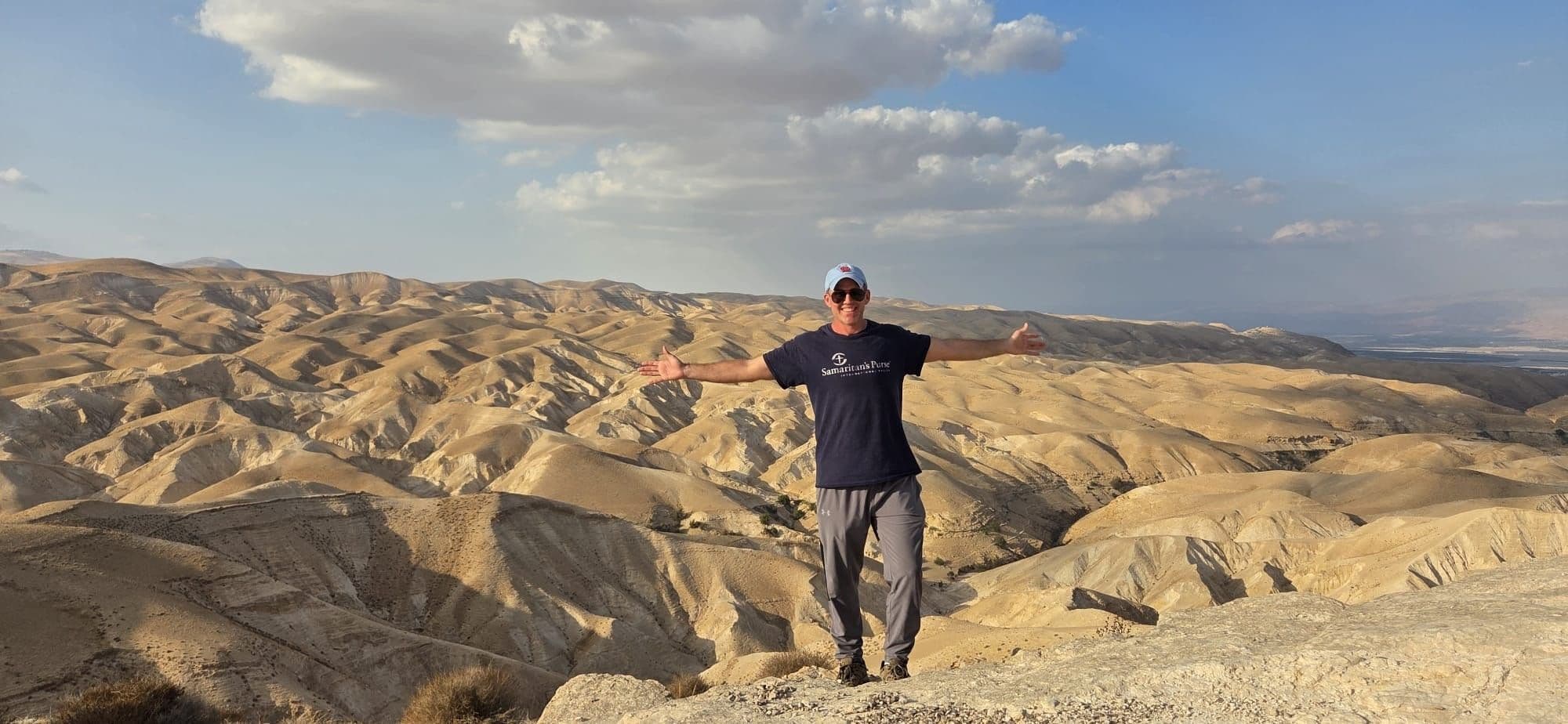
Jerusalem University College students in GEO 5/311 Physical Settings traveled from Gezer through the central Benjamin plateau to Jericho, examining the relationship between biblical narratives, archaeology, and the geography of the land.
At Gezer, the group read from Joshua 10 and considered the route of the Amorite kings through Beth Horon and the Ayalon Valley. Hannah Fox introduced the excavation history and recent discoveries at the city gate complex. Discussion included the possibility of centralized authority behind its construction, the significance of finds such as an ivory game board, and the continuing debate over the dating of structures sometimes described as “Solomonic.” Students also considered the civic role of city gates and their imagery in the Psalms.
The group continued along the Beth Horon routes to Nebi Samwil, traditionally associated with the burial of Samuel and the high place of Gibeon. From the lookout, students surveyed the central Benjamin plateau and considered the geographical setting of narratives in 1 Samuel. Farther east, a view toward Michmash and Geba provided context for Jonathan and his armor-bearer’s ascent toward a Philistine outpost in 1 Samuel 14.
At Jericho, the class discussed Joshua 2 and the interpretive questions raised by the absence of excavated Late Bronze Age city walls. Mang Par also reflected on the visible contemporary divisions encountered on the journey, observing how travel through the area made regional conflict less abstract and underscored the need for deeper understanding.
The field study concluded with a short hike overlooking the Judean wilderness. For Par, the landscape brought to mind the biblical account of Jesus’ temptation and provided a striking conclusion to a day of geographical and scriptural study.