
News
JUC Students Explore Jerusalem’s Biblical Geography on Field Study
JUC students explore Mount Scopus, the Mount of Olives, Herodium, and Bethlehem during a Physical Settings field study.
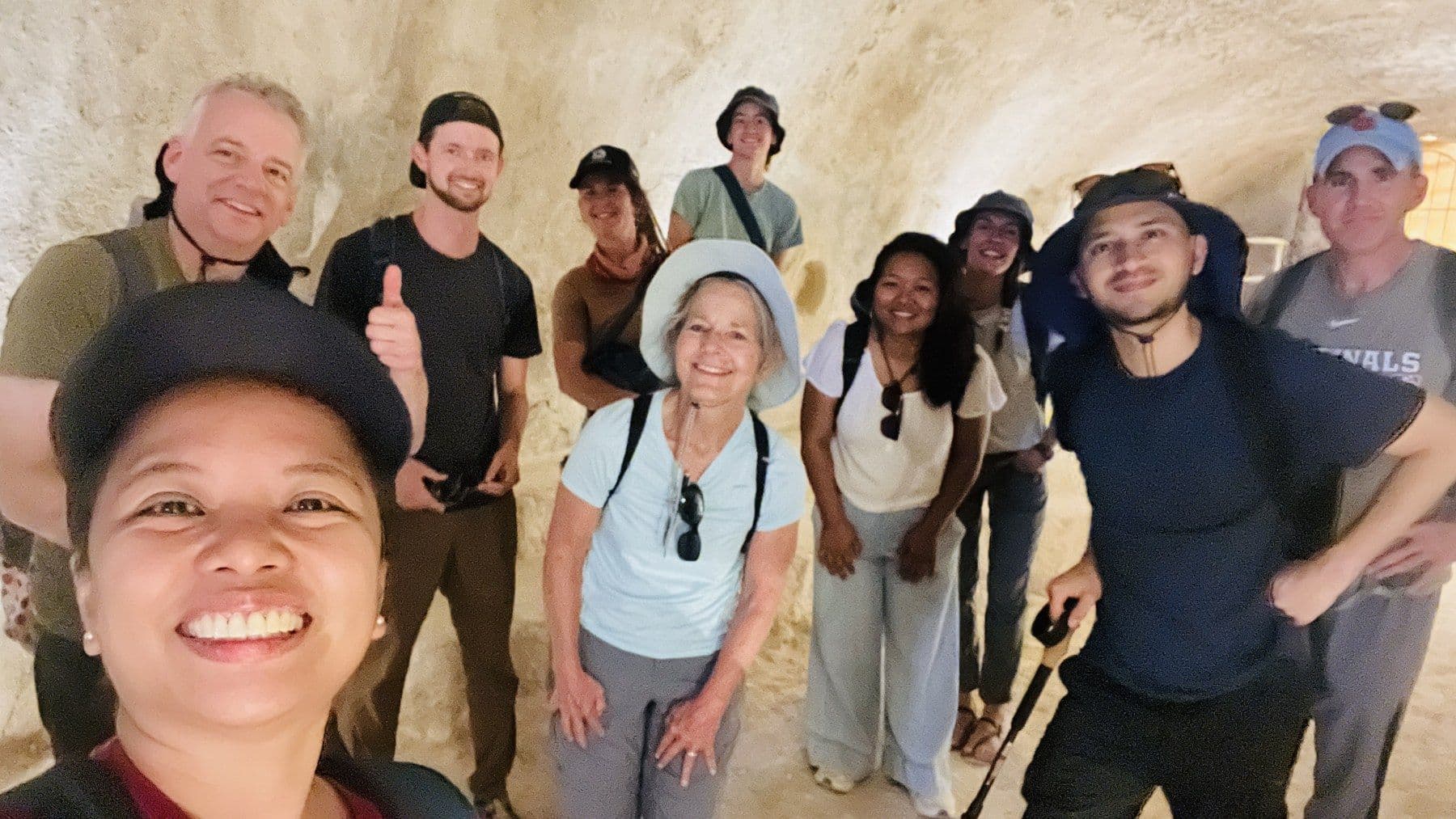
Jerusalem University College students explored the approaches to Jerusalem and the surrounding biblical landscape during a GEO 5/311 Physical Settings field study in September 2026. The journey brought together geographical observation, historical study, and readings from Scripture at sites east and south of the city.
The group began at an east-facing overlook on Mount Scopus, where students observed the rain-shadow effect and looked toward the wilderness and Transjordan. From this vantage point they also considered Anata, associated with the biblical Anathoth, the hometown of the prophet Jeremiah. A west-facing overlook on the Mount of Olives provided a view of Jerusalem and an opportunity to discuss the mountain’s Jewish burial traditions and David’s flight during Absalom’s rebellion in 2 Samuel 15.
Students then descended the Mount of Olives on foot, stopping at Dominus Flevit, the Garden of Gethsemane, and the Church of All Nations. Readings from Luke 19 and John 18 connected these locations to Jesus’ approach to Jerusalem and his prayer before his arrest. In the Kidron Valley, the group examined ancient funerary monuments and discussed the later traditions associating them with biblical figures.
The afternoon focused on Herodium, the fortress and royal complex constructed by Herod the Great south of Jerusalem. Students studied its defenses, bathhouses, courtyard, and the remains of the lower royal estate, considering the scale of Herod’s building projects. The field study concluded in Bethlehem at the Church of the Nativity, with a reflection on Matthew 2:1–3 and the relationship between Bethlehem, Jerusalem, and Herod’s reign.
Through direct engagement with the terrain and its archaeological remains, the field study illustrated how Jerusalem’s geography informs the reading of biblical narratives.