
News
JUC Revelation Field Study Connects the Seven Churches with Their Historical Setting
A JUC field study in Türkiye connects the messages to Revelation’s seven churches with their geographical and historical settings.
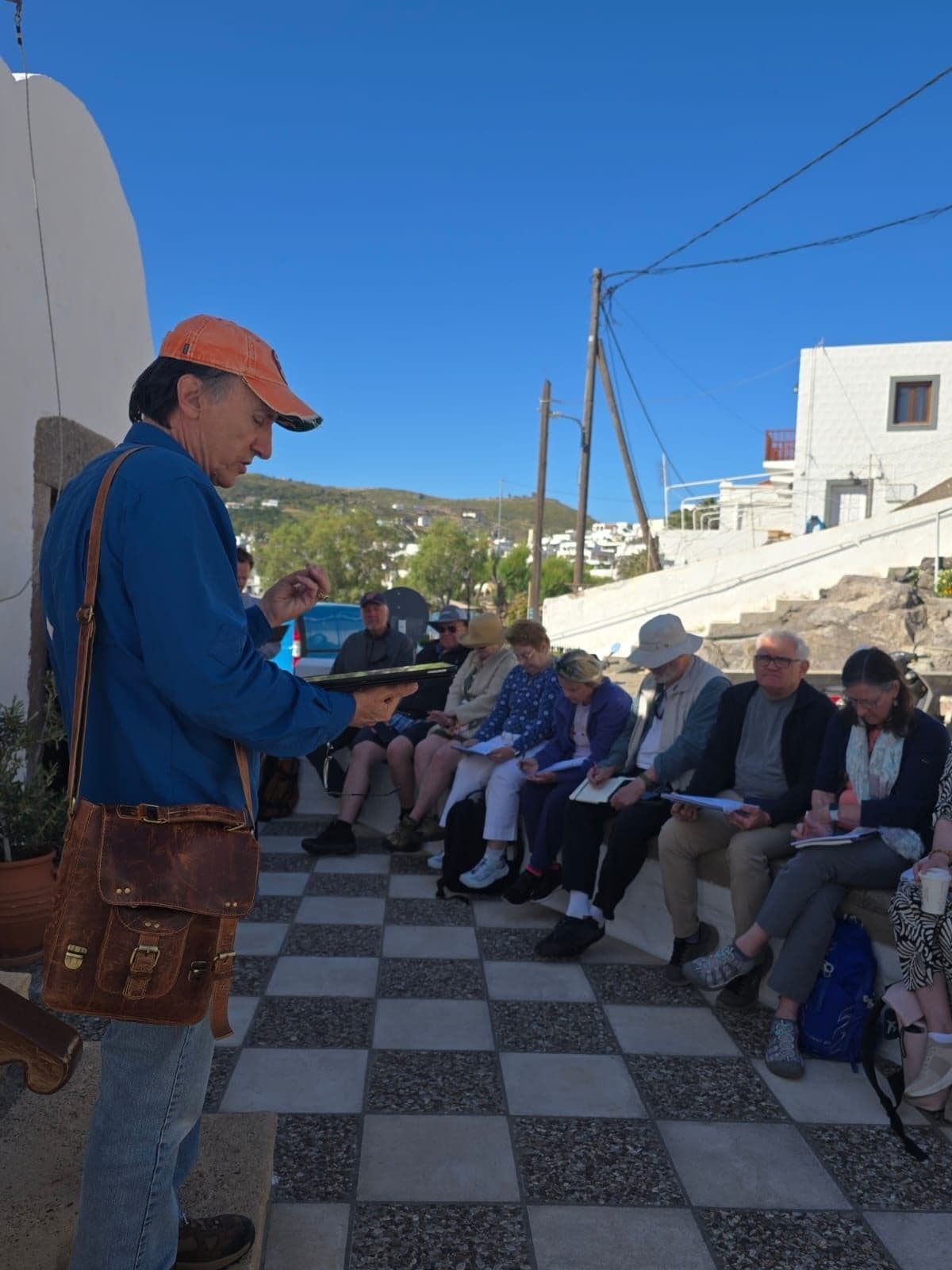
A JUC field study in Türkiye, led by Dr. Chris Vlachos, provided a setting for studying the historical world of the Book of Revelation. In a reflection shared in the May 16, 2025, Friday AM newsletter, recent JUC graduate Hayden Ikerd considered the messages to the seven churches of Asia Minor and their continuing significance for readers of the text.
Ikerd began with the island of Patmos, where Revelation places John when he received the vision. He identified the seven churches addressed in the opening chapters as Ephesus, Smyrna, Pergamum, Thyatira, Sardis, Philadelphia, and Laodicea—communities located in what is now western Türkiye.
His reflection emphasized the particular character of each message: commendations of faithfulness, challenges to compromise, and calls to endurance. Rather than treating Revelation solely as a text to decode, Ikerd highlighted its call to attentive reading and faithful response.
The newsletter also documented the Revelation course through photographs of archaeological sites, group discussions, and travel in the region. Together, the field experience and Ikerd’s written reflection illustrated JUC’s approach to studying biblical texts in conversation with their geographical and historical settings.
Ikerd concluded by inviting readers to consider how the messages first addressed to ancient congregations continue to challenge communities of faith today.