
News
JUC Field Study Examines Biblical Events in the Landscape of Jerusalem
JUC students examine biblical narratives through the geography and archaeological remains of Jerusalem.
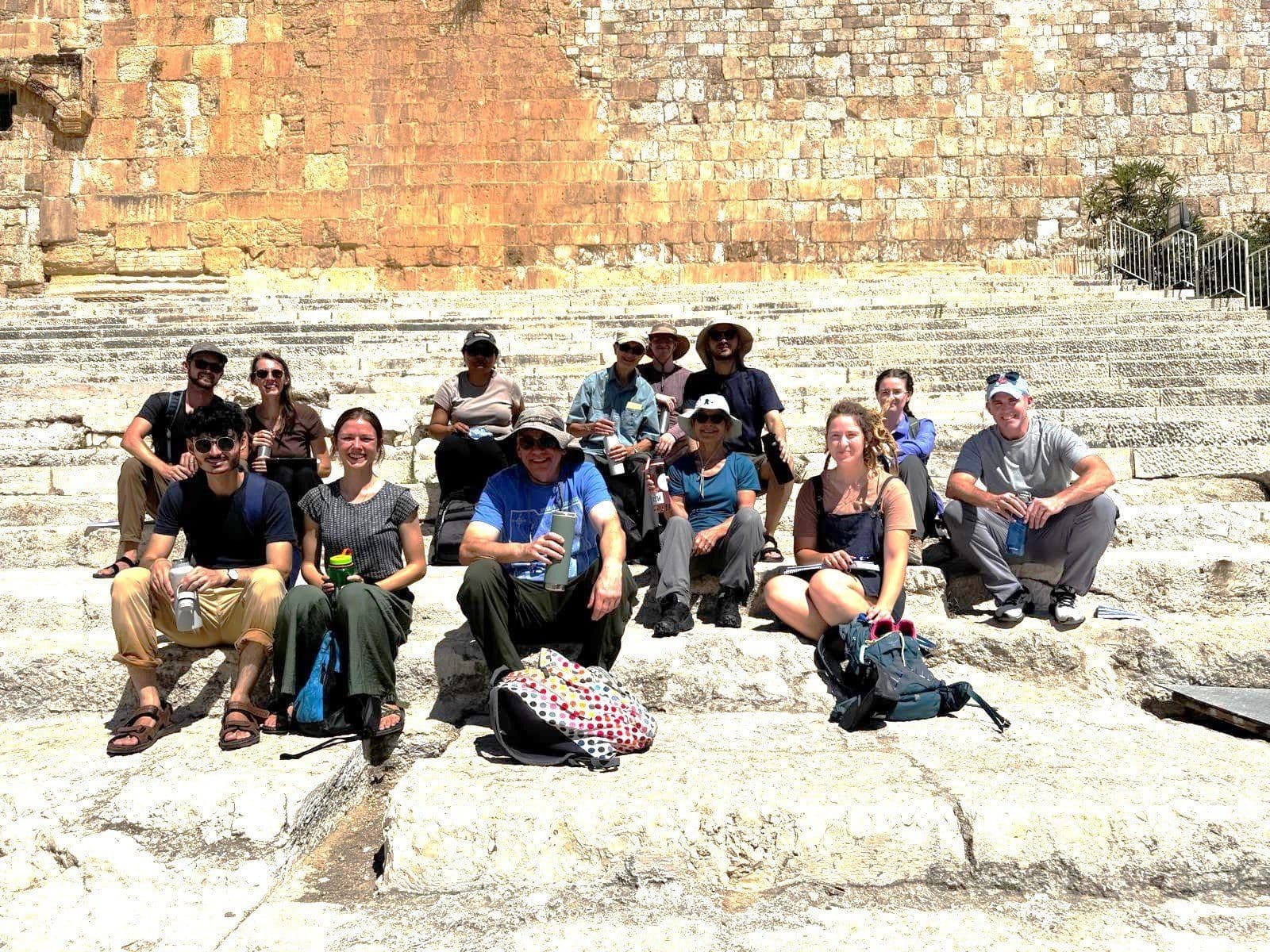
A Jerusalem University College field study in September 2026 examined the geographical settings of several major biblical events, including Jesus’ cleansing of the Temple, David and Bathsheba, and the crucifixion and resurrection narratives.
In his account of the study, M.A. student Steven Hempel described walking the pilgrim road toward the southwest corner of the Temple Mount, a route that had not been open to the public during his earlier visit in 2019. The group considered differing interpretations of the Gospel accounts of Jesus’ cleansing of the Temple, including questions about the location and practices of merchants.
Near the Gihon Spring in the City of David, views toward the Kidron Valley helped students consider the topography associated with the account of David and Bathsheba in 2 Samuel 11.
The group also visited the Church of the Resurrection, commonly known as the Church of the Holy Sepulchre. Hempel reflected on the proximity of locations traditionally associated with Jesus’ crucifixion, burial, and resurrection. Students read the account of Mary Magdalene at the tomb in John 20.
The visit introduced students to the church’s shared custodial arrangements and the role of the Joudeh Al-Husseini and Nuseibeh families in its traditions. The field study illustrated how studying Jerusalem’s physical setting can inform close reading of biblical texts.