
News
From the Dead Sea to the Shephelah: JUC Students Explore Southern Israel
JUC students explore the Dead Sea region, biblical Negev, coastal plain, and Shephelah during a three-day Physical Settings field study.
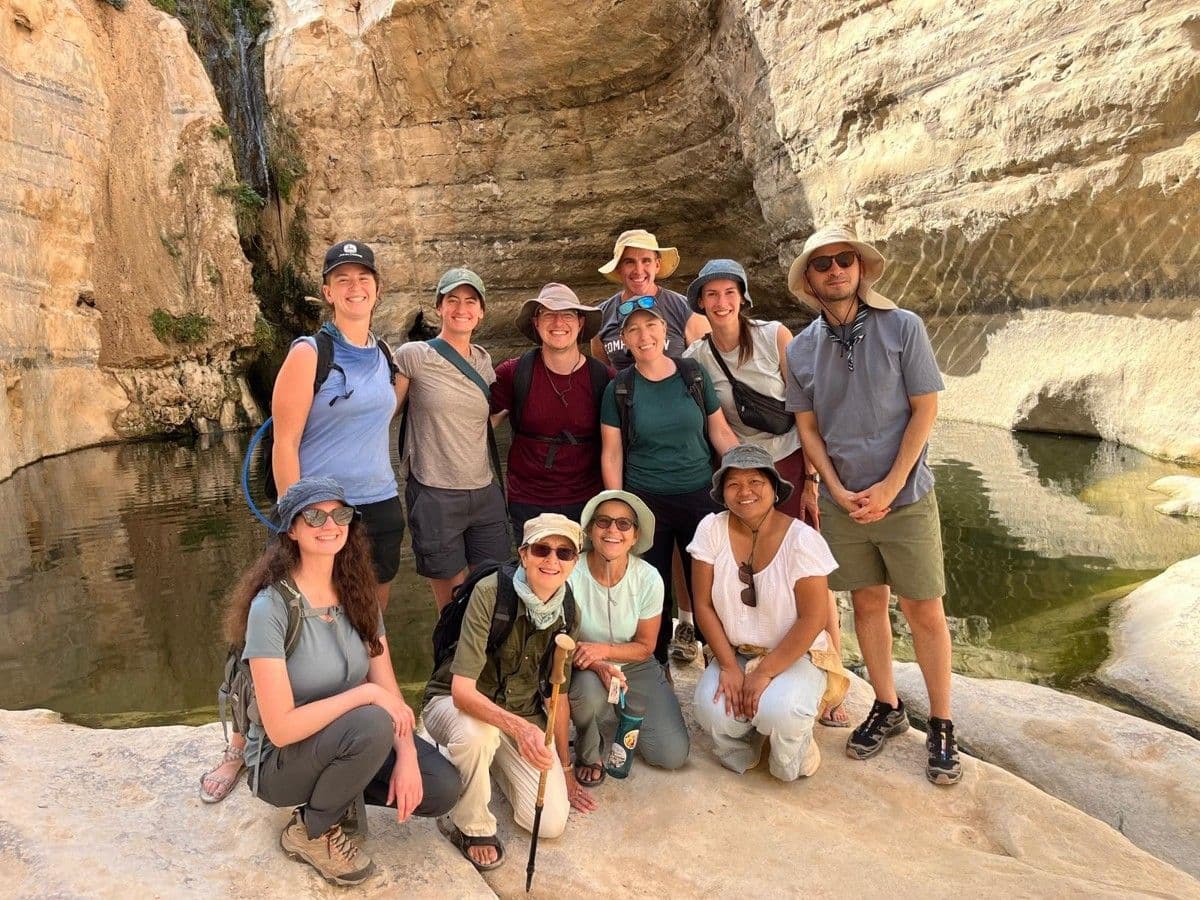
Jerusalem University College students traveled through southern Israel in October 2026 as part of the GEO 5/311 Physical Settings course. The three-day field study explored the Dead Sea region, biblical Negev, coastal plain, and Shephelah, connecting classroom learning with the historical and geographical settings of Scripture.
The journey began at Qumran, Ein Gedi, and Masada, three locations associated with refuge in the wilderness. At Qumran, students considered the discovery of the Dead Sea Scrolls and the Jewish community associated with the site. At Ein Gedi, the landscape provided context for the experiences of David while fleeing Saul and the imagery of Psalms 61–63. At Masada, students explored the fortress associated with Herod the Great and later Jewish resistance during the First Jewish-Roman War.
After floating in the Dead Sea, the group continued to Arad. The following day included visits to Tel Arad and Beersheba, where students examined ancient religious practices, regional defenses, and the patriarchal narratives. A canyon hike and a visit to the Nabataean and Byzantine site of Avdat provided further opportunities to study the region. The day concluded at Makhtesh Ramon.
The final day brought the group to the Mediterranean coast and the Shephelah, including Ashkelon, Lachish, and Azekah. At Lachish, students considered the Assyrian conquest during Hezekiah's reign, while the landscape around Azekah offered geographical context for the account of David and Goliath.
The field study concluded with views of the hill country of Judah. Through firsthand study of these landscapes, students gained a deeper understanding of the geographical and historical settings of the biblical narrative.